Author: BernardG

  • Digital Product & Service Strategy

    n

    Take your digital product to the next level

    nnnn

    It’s simple to come up with a long list of scope requests and technical needs that, on their own, check off a feature list, but these criteria won’t motivate consumers to take activities that will help your company achieve its goals.

    nnnn

    Getting your product to market as quickly as feasible

    nnnn

    Understanding successful product feature needs necessitate defining experience. Getting agreed on user expectations, goals, and usual behavior is an important part of the experience design process.

    nnnn

    “That is a good product approach”

    nnnn

    Bring your team amazing product strategy insights right now.

    nnnn

    Services and resources for product strategy

    nnnn

    1. User testing For user research, we employ a range of methods. Qualitative interviews and workshops, quantitative surveying and analytics, observation, and usability testing are all examples of these methodologies. All of this is to figure out what works and where we can strengthen organizational processes and people to better serve the market with more aligned goods and services.

    nnnn

    2. Definition of a Market – Your product and service efforts will be more focused if you do a market opportunity study. Define your target market and how tap into it using a procedure that identifies the best ways to increase your company’s market share.

    nnnn

    3. Inclusive design – By allowing various market groups to participate genuinely with your business, the inclusive design guarantees that your goods and services are welcomed by your market. Learn how to create work that prioritizes intersectionality, usability, accessibility, and inclusion.

    nnnn

    4. Improvement is ongoing – You have the chance to improve the value of your work at every level of strategy, design, and development. You may reap the benefits of better interacting with your customers, leading them toward organizational objectives, and continuously optimizing your team’s efforts via continuous improvement.

    nnnn

    Digital Service: Delivered, connected experiences

    nnnn

    Modernize your business to provide more efficient service and a better client experience.

    nnnn

    The goal of service design is to develop new services–or improve current ones–that better-fit market demands with company goals and capabilities.

    nnnn

    “Our group takes a more practical approach. It’s digitally focused and produces excellent outcomes for our clients.”

    nnnn

    We provide you with quick actionable service and associated product recommendations, resulting in improvements in key metrics like customer growth, engagement, retention, satisfaction, revenue, team efficiency, and more

    nnnn

    Our toolset for service design

    nnnn

    1. Recognize – We identify and map the holistic experience of your services, as well as how consumers, employees, and other participants move across the service’s touchpoints, using information collecting and research methodologies.

    nnnn

    2. Examine – Customer journey mapping, service blueprinting, and other techniques are used to uncover organizational gaps, market opportunities, and process improvements.

    nnnn

    3. Implementation and optimization – Our findings will be analyzed and synthesized to provide a plan that will lead your team in making strategic changes to your services. You’ll get the tools you need to better align internal teams and stakeholders, offer services more effectively, and identify new automation, data, and digital product opportunities using the added lens of digital strategy consulting.

    nnnn

    4. Ongoing development – Our team will guide you through the fundamental goals and key results (OKRs) and key performance indicators (KPIs), as well as related data tracking, user testing, analysis, and techniques, to improve your service delivery over time.

    nnnn

    Processes relating to service design

    nnnn
      n
    • User testing – For user research, we employ a range of methods. Qualitative interviews and workshops, quantitative surveying and analytics, observation, and usability testing are all examples of these methodologies. All of this is to figure out what works and where we can strengthen organizational processes and people to better serve the market with more aligned goods and services.
    • n
    nnnn
      n
    • Strategy for the system – With a methodology that discovers critical possibilities to enhance client engagement and retention while streamlining operations, system strategy helps speed internal decision-making. We accomplish this by defining an effective roadmap that fulfills organizational and market demands by mapping internal capabilities and consumer objectives.
    • n
    nnnn
      n
    • Inclusive design – By allowing various market groups to participate genuinely with your business, inclusive design guarantees that your goods and services are welcomed by your market. Learn how to create work that prioritizes intersectionality, usability, accessibility, and inclusion.
    • n
    nnnn
      n
    • Developing digital mastery – Operating online necessitates a substantial level of knowledge in everything from communications to product development to organizational efficiency. Success in the connected era necessitates a breadth of knowledge that defines your organization’s digital maturity and capabilities, with digital channels and customer touchpoints going beyond online to in-person and at home.
    • n
    nnnn

    Learn how reviewing and refocusing your company may lead to better operations, customer service, and technology decisions. Contact me at bernard@vgoshinfo.com to discuss how your company can start improving services and customer experience right away.

    n
  • Digital Transformation. Is it that important?

    n

    This period has an unprecedented development in the field of information and technology. Digital Transformation is being seen in everything. Whether it is the banking sector or payment process, transportation, or correspondence, most of the things that are required in our plan life are now available online. So digital transformation is the need of the hour and we are going to read everything about digital transformation and digital transformation consultancy.

    nnnn

    What is the real meaning of Digital transformation?

    nnnn

    Digital Transformation is to integrate the things which are being used in our daily life as digital technology. This means that anything should be developed so well technically that it is clearly understood and easily available to all people. When something is put into digital format through a process, it is also called Digital Transformation. For example, we were sending a letter to someone earlier through the post. Now we are sending the same letter through the computer using email and also through email. So this postal process has changed to email, this is also Digital Transformation.

    nnnn

    Another example of this can also be that earlier you used to go to a travel agency for booking etc. to go on a tour somewhere, but now you make a booking through the website of that travel agency sitting at home. This process of booking has been done online, it is also Digital Transformation.

    nnnn

    Digital transformation consulting?

    nnnn

    Digital transformation consultancy is not specifically about IT and technology, it’s about redefining your entire business digitally to compete and succeed in this competitive business world. Digital transformation consulting services are not just about applying technology to your business, it’s actually about creating a new business model on the backbone of technology. These services analyze the conventional working structure of the company and suggestions for improvement with the help of technology and innovation. It helps to make your customer experience better by sorting all the dull work and inefficiency of a company.

    nnnn

    Why it is important?

    nnnn

    If you want to understand the importance of digital transformation consultancy, then you must know the importance of digital transformation. Here are some key factors of digital transformation;

    nnnn

    The digital transformation continues to accelerate for two main reasons (1) technology is evolving at an exponential rate in today’s world and (2) data is far more plentiful and usable. Digital transformation provides a low-cost tool and enables strategies that give small and medium-sized businesses a fighting chance to compete at the same level as major enterprises.

    nnnn

    Digital transformation consulting services use to tackle the problems of companies and enhance the above-mentioned services.

    nnnn
    www.bernardg.net
    nnnn

    How does a digital transformation consultant add value?

    nnnn

    Digital transformation consultancy services add value to your business by proper analysis and execution of the plan.
    These services go through proper study of your company data like data about consumers, data about your competitors, data about your supply chain, and data about your markets.

    nnnn

    Having this data and knowing how to use it pulls your critical business decisions out of the shadow of opinions and brings intelligent options into the light so that your business grows.

    nnnn

    Importance of data in digital transformation consulting

    nnnn

    Digital transformation consultancy depends on data and data depends on effective collection, cybersecurity, analytics, and application. These consulting companies work on the following model;

    nnnn
      n
    • Get the data
    • nnnn
    • Protect the data
    • nnnn
    • Analyze the data
    • nnnn
    • Utilize the data
    • n
    nnnn

    Do you have a digital transformation strategy?

    nnnn

    According to the Forrester report, 74% of the business executive say that their company has a digital transformation strategy but only 15% believe that their company has the skills and capabilities to execute that transformation strategy.

    nnnn

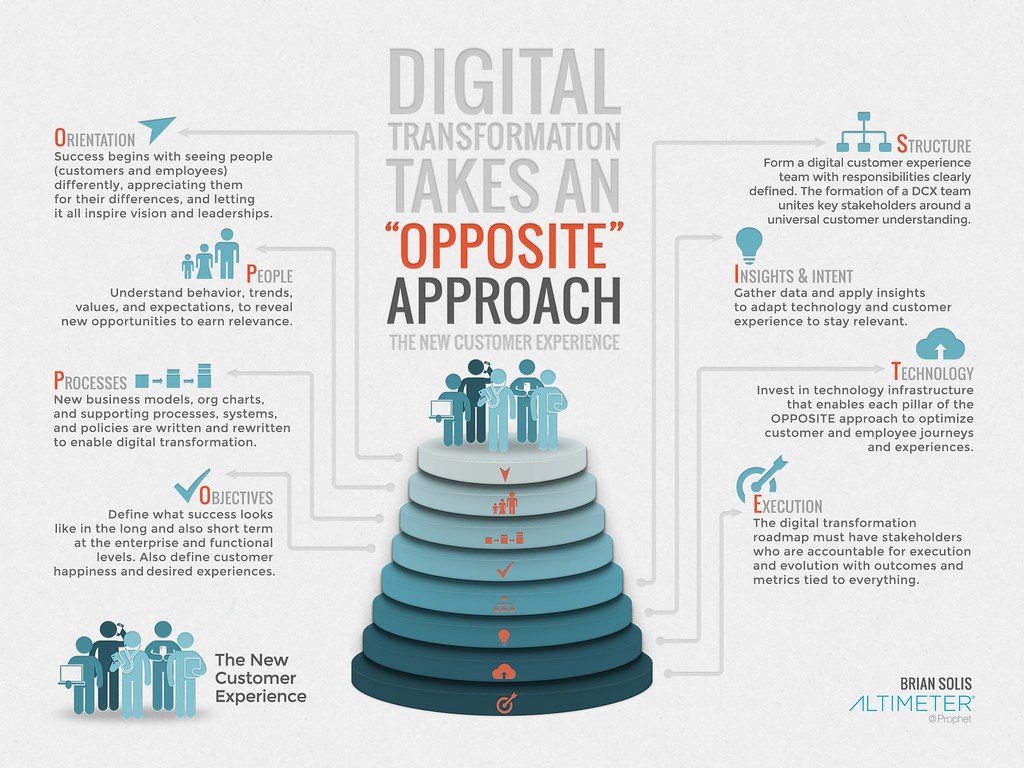
    Digitally transforming your organization changes everything, it changes your corporate strategy, it changes your business processes, it changes your market capabilities and it even changes the roles and skills you need to fill to bridge the gaps between your company and the technologies you need to master.

    nnnn

    Talk to us for more.

    n
  • Digital Transformation in India’s Industry 4.0

    n

    The fascination behind the term “digital transformation” is currently at its highest. By definition, digital transformation is “utilizing the current processes and marrying it with advanced technologies, working hand in hand to drive the processes forward more productively all while reducing inefficiencies”. Industry 4.0, by in large focuses on the manufacturing sector, and how it is handling the integration of advanced technologies to focus on connectivity and communication for better output. Solely driven by the current digital changes, Industry 4.0 currently in India is shaping up to be a monster partnership in revolutionizing production, reshaping businesses, and generating better relationships across all verticals i.e. producers, suppliers, and customers.

    nnnn

    The latest assessment by UNIDO (United Nations Industrial Development Organization) has projected India as the only lower-middle country to make it into the second group of leading economies of the world. This is in part due to India’s heavy investment in Advanced Data processing technologies in developed countries such as US, UK, and Japan. Besides its manufacturing clout due to sheer labor advantages, its strong position in Integrated Communication Technology services is vital in bridging the gap of bringing ADP technologies to the manufacturing floor.

    nnnn

    nnnn

    The COVID-19 pandemic has ushered us all into a new digital age rather violently. Over the last few months, we have seen a transformation of all the industries we have known such as education, healthcare, government, and hell even large multinational corporations to work remotely or online. The boundaries that existed between digital and physical are more in sync than ever, and this transformational opportunity when employed in the manufacturing segment ushers in the concept of smart factories.

    nnnn

    Advantages and Disadvantages of ADP technologies:

    nnnn

    Based on factual evidence and deep assessment, ADP technologies have been found to foster harmonious and sustainable development. They offer superior product capability, advanced customization for clients and suppliers alike, high market responsiveness, and a higher potential to meet environmental guidelines and conserve resources. ADP technologies have the potential to take over the most perilous jobs, improve overall energy consumption and increase heterogeneity in the workplace.

    nnnn

    On the flip side, emerging technologies will affect employment massively. Labor-intensive jobs will see a decline in the manufacturing segment, and more focus will be applied to knowledge-intensive jobs. These jobs are important in the transition process and are key to developing productive teams in the future.

    nnnn

    A current foray by the Indian Manufacturing segment and prospects for the future:

    nnnn

    With the introduction of the Udyog Bharat 4.0 mission, exemplary work is being done all across India in identifying key problems faced during the 2nd and 3rd industrial revolutions and mitigating them using advanced techniques. UNIDO’s global finding states that India is taking major steps in building their industrial capability to only onboard advanced technologies, but implement them on a larger scale across various factories in India. The learning that comes with running smart factories as per UNIDO’s findings is essential for future framework building. Currently, the technological divide is quite wide, with industrial leaders able to implement newer technologies but not getting the required support from their supply partners who are still traditional in their manufacturing process. India therefore has to implement Industry 4.0 as a nationwide concept which would help in serving all firms big or small to at least partially implement automation in their quest to be fully ready for the future. Although the current policies are highly contextual a balanced framework for the future has to be readied. Improving overall awareness of technological advancements, strong funding support, and enhanced sourcing of talent will altogether help India in being a self-reliant world-class $1 trillion manufacturing economy within the next five years. 

    n